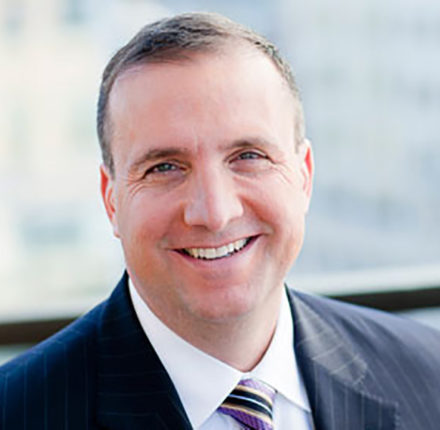
“With President Donald Trump’s selection of Kevin Warsh to be the next chair of the Federal Reserve, financial markets are questioning to what extent Warsh will separate himself from his past leanings as an inflation hawk. Warsh is likely less hawkish than he is a political animal. The question is not just whether he has changed his mind, but whether he can also change the minds of his fellow committee members.” — Howard Schweitzer, CEO, Cozen O’Connor Public Strategies
The Cozen Lens
- President Trump’s pick for Federal Reserve (Fed) chair, Kevin Warsh, will only be able to deliver on the administration’s promised lower rates and structural Fed reforms if he can build consensus among his colleagues.
- While the 2026 Senate map favors Republicans to keep their majority, this year’s political environment benefits Democrats.
- A hearing in the Senate last week explored what autonomous vehicle companies want more than anything else: comprehensive, national regulation.
Can Warsh Deliver for Trump?
From a Hawk to a Dove. As a Fed governor during the Great Financial Crisis and in the ensuing years, Kevin Warsh made a name for himself as an inflation hawk, but as President Trump’s nominee to chair the Fed, Warsh has made it clear that he’ll be a staunch advocate for lower rates.
- While Trump didn’t formally condition the role of Fed chair on a commitment to lower rates, he made it clear throughout the selection process that any candidate should be similarly focused on lowering the federal funds rate. Trump has repeatedly referred to outgoing Fed Chair Jerome Powell as “Too Late” for his perceived resistance to easing monetary policy in Trump’s second term. Following his announcement of Warsh’s nomination to succeed Powell, Trump joked that he’d sue the incoming Fed chair should he fail to quickly lower rates.
- Despite the president’s well known interest rate-related criteria for a Fed chair, markets reacted in a mixed manner to the announcement of Warsh’s nomination, fearing that his past hawkish tendencies would follow him to his new role. Those concerns persist despite more than a year of speeches, interviews, and op-eds in which Warsh has forcefully made the case for lower rates. As Trump himself told NBC last week, Warsh wouldn’t have gotten the job offer were he still a supporter of higher rates.
- Even so, while Warsh himself is expected to join Trump in seeking lower rates at the Fed, actually turning such a wish into reality isn’t a one-person job. Warsh may face an uphill battle convincing a majority of the 12-member Federal Open Market Committee to join him in reducing the federal funds rate, particularly should the economic data paint an uncertain picture. As the New York Times wrote last week, “…if economists’ forecasts are even remotely accurate, growth is poised to pick up, the labor market will stabilize and inflation will only gradually ease. There is still likely a path to cut in that environment, but much more gradually than what the president wants.”
The Fed Reimagined. In addition to charting a new course on monetary policy, Warsh has ambitious plans to shrink the Fed’s fiscal policy footprint.
- A theme of Warsh’s remarks and writings over the last year or so has been a criticism of the Fed’s post-financial crisis expansion of its balance sheet and its non-monetary policy activities. In April remarks before the Hoover Institution, Warsh said, “Changes in the role of the US central bank have been so pervasive as to be nearly invisible. The Fed has assumed a more expansive role inside our government on all matters of economic policy. And moved into matters of statecraft and soulcraft, too.” Warsh is particularly critical of the Fed’s 2010s quantitative easing policy which he believes encouraged the federal government to similarly increase its spending, resulting in an abnormally high “debt burden” that he views as the true driving force behind inflation.
- To address the issues he’s identified, Warsh is expected to pioneer a new approach to the Fed’s balance sheet with the goal of shrinking it. Economist Mohamed El-Erian told Politico last week that Warsh will likely push the Fed to develop “…a view on what is an optimal balance sheet, just like we have a view on what is a neutral interest rate.” Warsh has suggested that he could pursue a new Treasury-Fed accord, a move that would tighten the relationship between the two institutions and offload “some control of [the Fed’s] balance sheet…to the Treasury” according to reporting from the Financial Times. A more closely aligned Fed and Treasury Department could also result in greater deference by the Fed to the administration’s bank deregulatory agenda.
A Bumpy Path to Confirmation. Before he can assume the reins from Powell, Warsh will need to be confirmed by the Senate, the pathway to which is complicated by a Department of Justice (DOJ) investigation into Powell.
- Broadly speaking, Warsh’s prospects for a smooth Senate confirmation are bright; GOP senators from across the ideological spectrum have issued supportive statements of his nomination. With only a simple majority needed to confirm Warsh in the Senate, even unanimous opposition from Senate Democrats won’t pose a major challenge for him.
- But before Warsh can reach the Senate floor for a confirmation vote, he’ll first need to be voted out of the Senate Banking Committee. For now, Warsh’s path out of committee is blocked by Banking Committee member Thom Tillis (R-NC) who is promising to oppose the nomination until the DOJ concludes its criminal investigation into Powell. The Banking Committee’s process (and Tillis’ opposition) can be bypassed with a Senate vote to discharge the Banking Committee of its duties relating to Warsh. However, such a maneuver would require 60 votes unless the current rules are changed, a threshold the GOP could struggle to reach without the support of some Democrats. Instead, the White House will need to find a way to address Tillis’ concerns or pressure the senator into folding before Powell’s term expires in May.
Competing Dynamics of the Senate Midterm Elections
Good News for Republicans. The map of Senate seats up for election this year is positive for the GOP.
- Republicans currently hold a 53-seat majority in the upper chamber and are defending only one seat in a state won by former Vice President Harris in 2024: that held by Senator Susan Collins (R-ME).
- To flip Senate control, Democrats would need to win four seats. This would mean defending their seats in Trump-won Georgia and Michigan, defeating Collins in Maine, winning an open seat in North Carolina (a swing state won by Trump three times), and winning two additional seats in red states. Those last two seats would have to come from states like Alaska, Iowa, Ohio, or Texas, challenging territory for Democrats today.
- Historical trends favor the party out of power in the White House to make gains in midterm elections but the Senate map can make a big difference. In President Trump and former President Biden’s midterms in 2018 and 2022, respectively, the president’s party gained Senate seats while losing seats in the House.
Good News for Democrats. Senate Democrats’ path to the majority may be narrow but the political currents are running in their direction.
- President Trump’s sagging polling numbers on two of his strongest issues in 2024, the economy and immigration, risk bringing down other members of his party. An NPR/PBS News/Marist poll last week found 36 percent approval and 59 percent disapproval of the job he is doing on the economy. A Reuters/Ipsos poll late last month found 39 percent approval and 53 percent disapproval of Trump’s handling of immigration.
- Democratic overperformance in a Texas special election last week suggests that the party may be able to go on offense in red states this fall. Last week, the Democratic candidate for a Texas state Senate seat defeated his Trump-endorsed GOP opponent by 14 points in a district that the president won by 17 points in 2024. Incumbent Senator John Cornyn (R-TX) is locked in a three-way primary with Texas Attorney General Ken Paxton (R-TX) and Rep. Wesley Hunt (R-TX) that could go to a runoff. A Cornyn primary loss could make it easier for Democrats to compete for the seat. But even if Republicans ultimately keep the seat, the campaign would require more investment of resources.
- Some Republicans are starting to worry more. “A year ago, I would have told you we were almost guaranteed to win the Senate. … Today, I would have to tell you it’s far less certain,” an anonymous GOP operative told Axios also reported that National Republican Senatorial Committee Chair Tim Scott (R-SC) warned fellow Senate Republicans about the political challenges they’re facing in a briefing last week.
- Senate Democrats have succeeded in recruiting competitive candidates for must-win seats, including current Governor Janet Mills (D-ME), former Governor Roy Cooper (D-NC), former Senator Sherrod Brown (D-OH), and former Rep. Mary Peltola (D-AK). These candidates would be well-positioned to take advantage of any political tailwinds benefitting Democrats but would have to win their nominations first.
Autonomous Vehicles Hit the Road
The Wild West of Self-Driving. The autonomous vehicle (AV) industry is the latest industry demanding more regulation from the federal government.
- The Senate Committee on Commerce, Science, and Transportation held a hearing last week on “The Future of Self-Driving Cars,” Congress’ second public meeting about the question this year. Representatives from Waymo, Tesla, and the Autonomous Vehicle Industry Association all testified. AV companies wanted one thing and one thing only: a national, comprehensive federal regulatory framework.
- Right now, it’s sort of the Wild West. All of the typical vehicles you see on the road are governed by Federal Motor Vehicle Safety Standards (FMVSS); because these standards were originally written and historically updated without modern AV technology in mind, there’s a large scale effort to modernize these standards for a world where AV Technology has become far more real than theoretical. Under the status quo, all AV companies have to maneuver ill-fitted FMVSS guidelines or seek exceptions, which have been infrequently granted. While there is a federal system for reporting AV road incidents, there are no universal standards or minimum bars that complex software must meet to be determined safe enough to hit the road.
- Much of the regulatory gap is being picked up by the states. The result is a patchwork of varying and evolving state and local laws. While the federal government only regulates necessary equipment that a car is required to have, it’s often state and local governments that govern many of the important areas touched by AV deployment: operation of the vehicle on roadways, licensing, registration, insurance, liability, specific rules of the road, etc. While no state has passed explicit AV bans, some of their codes indirectly make operation difficult if not impossible. Moreover, there are also local rules that impact AVs, including use of the curb for pickup and drop off. States with regulations, laws, or guidelines often have their own permit system, making expanding the geographical footprint an arduous task. What AV companies seem to want is regulatory certainty, which many feel only federal law can provide.
Momentum in Congress Accelerates. AV firms might get their wish, as a bipartisan group of lawmakers is working to pass national reform, motivated by the economic benefits, road safety, and the fear of losing the AI race to China.
- The leading legislative proposal is the Safely Ensuring Lives Future Deployment and Research In Vehicle Evolution (SELF DRIVE) Act of 2026. This legislation would set minimum standards for self-driving software performance, clarify vehicle standards, and establish a new data reporting system. And importantly, it establishes federal preemption over state and local laws. So long as an automated driving system satisfies the federal requirements, the latter would be unable to set any standard that would block AVs or require them to submit crash data.
- While lawmakers on both sides of the aisle agreed on the necessity of comprehensive regulation, the devil’s in the details. Republicans tend to emphasize the need to let the industry innovate, while Democrats highlight safety and AI concerns. The issue also uniquely divides Congress. A combination of traditional, free market Republicans and pro-business Democrats (many of whom represent areas where the vehicles are being developed or tested) supports encouraging the growth of the technology. Still, there is also resistance to self-driving cars in both parties. Many Democrats worry about the unimpeded rise of AI and the safety concerns posed by allowing robots to drive heavy machinery at high speeds. Pro-labor Democrats and some populist Republicans, meanwhile, are hostile to the technology because of fears that it threatens to put a large number of blue-collar workers out of a job.
- Going forward, while the SELF DRIVE Act of 2026 and other similar legislative proposals certainly stand a chance, their proponents need to satisfactorily address these concerns. While unlikely to pass, laws taking AVs in the opposite direction — like Senator Josh Hawley’s (R-MO) idea requiring “human safety operators” in any AVs on public roads — could also be introduced. Bill authors have said they’re looking to the reauthorization of federal surface transportation funding, which expires September 30th, 2026, as a legislative vehicle to pass changes and as the deadline guiding their work.
- In the meantime, we should expect further regulatory changes from the Department of Transportation (DOT) to smooth the path for self-driving cars in 2026, continued state-level deliberation on the technology, and additional industry expansion into more cities. The Trump administration is a major supporter of AVs. They view it as a high priority (within transportation) and will do what they can to make life easier for AV companies. DOT has already taken steps to alleviate both the FMVSS and reporting requirements. Governor Kathy Hochul (D-NY) has announced her intention to propose a law that would permit vehicles without a human operator in the state for the first time. Similar bills are under consideration in Virginia, Illinois, and Wisconsin.