“The long struggle to install Kevin Warsh as the next chair of the Federal Reserve has finally reached its denouement. But the battle over the central bank’s independence is just heating up.” — Howard Schweitzer, CEO, Cozen O’Connor Public Strategies
The Cozen Lens
- Kevin Warsh’s path to Fed chair confirmation is clear, but questions about his ability to defend the institution’s independence will follow him there.
- The Californian gubernatorial race has been rocked by two recent developments: the endorsement of the leading Republican candidate by President Trump and the abrupt dropping-out of a leading Democratic candidate.
- House Republicans’ division over reauthorization of Section 702 of the Foreign Intelligence Surveillance Act underscores the challenges in legislating with their narrow majority.
Subscribe to Cozen Currents
What Fed Independence Depends On
Clearing a Path for Warsh. The Department of Justice (DOJ) is dropping its criminal investigation into Fed Chair Jerome Powell, clearing the way for Kevin Warsh to be confirmed as his successor.
- US Attorney Jeanine Pirro’s last Friday announcement that her office would close its investigation into Powell paves the way for Warsh’s confirmation to the Fed. Before Friday, the timeline for Warsh’s confirmation vote had been in limbo. Senate Banking Committee member Thom Tillis (R-NC) had vowed to block a needed committee vote to advance Warsh’s nomination, arguing that defending the Fed’s independence superseded the need for a timely confirmation. Although the DOJ and the administration framed the investigation into Powell as necessary oversight, both Powell and Tillis, among others, perceived it as an attempt to influence Powell’s monetary policy decision-making and to pressure him to leave the Fed early. President Trump has long criticized Powell’s rate-setting policies.
- With Friday’s news, Tillis now plans to vote in favor of Warsh’s nomination both in committee and on the Senate floor, eliminating the only major obstacle to his confirmation. The Senate Banking Committee scheduled its vote to advance Warsh’s nomination to the Senate floor for this Wednesday. Despite a Senate recess the first week of May, the chamber is expected to subsequently vote to confirm Warsh as Fed chair before May 15th, the date on which Powell’s term as chair expires. Few, if any, Democrats will vote in favor of Warsh’s nomination, but confirmation votes only require majority support in the Senate. The Senate GOP and its 53-seat majority should likely be able to confirm Warsh on their own.
The Fight Over Fed Independence Moves to the Fed. Even with the DOJ investigation behind him, Warsh’s commitment to Fed independence will come under fresh scrutiny from the White House, Senate Democrats, and his fellow Board members.
- While the DOJ investigation had taken center stage in the fight over Fed independence, other related issues remain unresolved, including the administration’s legal battle to remove Fed Governor Lisa Cook from her position. During the January oral arguments, Supreme Court justices appeared skeptical of the White House’s case favoring Cook’s dismissal. A ruling on the matter may not come until early summer. Should the court rule in the administration’s favor, the possibility of further firings will loom over the Fed Board, creating a difficult environment for Warsh to contend with early on in his tenure. In the more likely scenario that the court backs Cook, Warsh will have to navigate a potentially frustrated administration.
- Parallel to the Cook legal battle is Trump’s threat to fire Powell should he not step down from the Fed Board entirely at the end of his chairmanship next month. Powell’s term as a Fed governor extends into 2028, although prior chairs have set a precedent of stepping down from the Board when their term as chair expires. While Powell has made it clear he is open to leaving early, he’s also indicated that he’s hesitant to do so for as long as the DOJ continues to probe the Fed. If Powell extends his stay on the Board, even temporarily, Warsh could be forced to navigate a fresh effort to remove another Fed governor.
- Regardless of the Cook and (potential) Powell legal battles, Warsh could face fresh scrutiny from a White House hoping he can quickly deliver lower rates. Warsh needs a majority consensus among the 12-member Federal Open Market Committee (FOMC) to cut interest rates, a task made more difficult by the inflationary impact of the Iran conflict. Should it take Warsh time to build that consensus, the question will be whether the White House directs its frustration on board members like Governor Lisa Cook or on the chair himself. Such a scenario would put Warsh in an unenviable position. He could either defend those governors as Powell has done — risking White House backlash — or remaining silent, risk the ire of his fellow FOMC members and threaten his standing within the committee.
Warsh’s Plan to Cede Authority to Treasury. Independent of any political attacks on the institution itself, Warsh’s plans to restructure the Fed would inherently cede some of its independent authority to the Treasury Department.
- The cornerstone of Warsh’s plan to remake the Fed and lower rates is an overhaul of the central bank’s balance sheet. In the lead-up to his selection and confirmation, Warsh repeatedly laid the groundwork for shrinking the Fed’s remit in speeches and op-eds. He has suggested that the institution’s post-2008 management of the economy has gone well beyond the agency’s traditional dual mandate and breached into matters better suited to Congress and the executive branch.
- To solve this problem, Warsh is proposing shrinking the Fed’s balance sheet, a move that could include tying the agency more closely to the Treasury Department through a renewed Fed-Treasury Accord, according to Warsh himself. The Financial Times reports that a reimagined accord would shrink the role of the central bank while handing “some control of its balance sheet…to the Treasury.” Certain popular balance sheet reform ideas, such as relaxing bank liquidity requirements, are already a top priority of Treasury Secretary Scott Bessent and Fed Vice Chair for Supervision Michelle Bowman. And as Politico reports, independent of the regulatory reforms that could aid Warsh’s balance sheet reduction agenda, the Fed chair nominee may pursue a different approach. He could shift more of the Fed’s financial regulation and supervision authority to the administration’s political appointees in an effort to refocus the institution on its core mandate.
Golden State’s Gubernatorial Race Upended
Sacramento Shake-up. The election to replace California Governor Gavin Newsom (D) has been flipped upside down with just weeks to go before the primary.
- With Newsom term-limited, California’s gubernatorial race is truly open for the first time since 2018. The state will hold its nonpartisan primary on June 2nd, wherein the top two candidates (regardless of party) will advance to the general election. The California Democratic Party has urged poorly-polling candidates to drop out to prevent fragmentation but the prize of leading the Golden State has proven too alluring to ignore.
- The first bombshell was an endorsement by President Trump. Until recently, the GOP side has been marked by two roughly evenly matched candidates: Riverside County Sheriff Chad Bianco and Fox News contributor Steve Hilton. For almost a year, polls have shown each with between 10 and 20 percent of the vote overall, frequently handing the lead back and forth between each other. On April 6th, Trump came down on the side of Hilton. Since then, he’s often been the highest polling candidate in the race, with reported support between 16 and 25 percent. Support for Bianco has not dried up (yet), however, and he maintains his low-teens rating. Illustrative of the internal split: even after the endorsement, delegates at the California Republican Party Spring Convention were nevertheless unable to come down in favor of a single choice. Forty-nine percent backed Bianco, Hilton got 44 percent, and seven percent voted in favor of non-endorsement (60 percent was needed for an official endorsement).
- Some Republicans have argued that endorsing Hilton represents a mistake on Trump’s part. In such a deep blue state, any runoff between a Democrat and a Republican is likely to heavily favor the former. An endorsement from Trump in California may as well be the kiss of death. If you really wanted to maximize the slim chance of a Republican taking the governor’s mansion, the only viable path is taking advantage of an extremely splintered Democratic field (which exists at current). This would require consolidating support around two GOP candidates who both poll high enough to lock Democrats out of the general election entirely — or so the argument goes. Democrats have spent millions of dollars bolstering a Republican candidate to prevent this possibility in the past. Trump may have done their job for them — although it is still not a foregone conclusion.
Democratic Reconfiguration. Over on the other side of the aisle, Democratic primary voters have had to quickly abandon one of their leading figures and find a new candidate, leaving the race in a state of flux.
- The fall of now former Rep. Eric Swalwell (D-CA) was swift. The one-time presidential primary candidate had served in Congress since 2013 and was an impeachment manager in Trump’s second trial. News of his alleged repeated alleged sexual misconduct broke on April 9th. Within hours, notable campaign staff had quit, key unions revoked their support, all 21 members of Congress endorsing him retracted their support, and national party leaders were calling him to suspend his campaign. On April 12th, Swalwell officially left the race.
- It’s hard to overstate how big a deal this development is — and so late in the race. Ballots are already being mailed out to every registered voter. Swalwell’s name will actually remain on all those ballots, as state law doesn’t permit those who have already submitted nomination documents for statewide office to then withdraw Swalwell was described as a “frontrunner” and was frequently the highest-polling Democrat. All candidates are now urgently making their case to capture this new group of voters.
- There’s businessman and 2020 presidential primary candidate Tom Steyer (D), who has emphasized climate issues and has been the highest-polling Democrat since Swalwell dropped out. Some of the most recent polling, however, shows a rush of support towards the state’s former attorney general, Xavier Becerra. In one survey from the Independent Voter Project, his support has ballooned to 23 percent. Politico reports that Newsom’s orbit of advisers, put off by Swalwell, are now giving Becerra another look. While billionaires have pivoted their support behind relatively moderate candidate San Jose Mayor Matt Mahan (D-CA), he has regularly polled behind the other two in the low- to mid-single-digits.
- The most recent gubernatorial debate didn’t seem to bring clarity to the situation with few fireworks or break-out moments. One model found the chances of Democrats being locked out had fallen from 25 percent to two percent in the immediate aftermath of Swalwell dropping out and Trump’s endorsement. That the situation seems to have resolved in yet another stalemate has risen those odds once again to around ten percent.
- California’s importance should be obvious. Last year, the Golden State passed Japan to become the world’s fourth-largest economy (if considered alone). Besides being home to more than one in ten Americans, it also possesses the cultural dominance of Hollywood and the tech center of Silicon Valley. When action at the federal level stalls, it’s often California that rushes to fill the void (with a Democratic solution). Newsom has moderated substantially in his second term and is now seen as a leading option to be the Democratic presidential nominee in 2028. But if he is replaced by another Democrat, his successor will likely will be meaningfully more progressive.
FISA Standoff Lays Bare House GOP’s Challenges
The FISA Fight. House Republicans are deeply divided over reauthorization of Section 702 of the Foreign Intelligence Surveillance Act (FISA).
- Section 702 allows warrantless surveillance of non-Americans abroad for gathering intelligence, though privacy hawks have raised concerns about Americans’ data being included in these gathering activities. Despite the GOP’s traditional support for national security, the House has struggled to reauthorize the law. A faction of House conservatives with libertarian leanings are seeking reforms. The razor-thin margin of House Republicans’ majority gives any small group of lawmakers greater influence and has allowed Section 702 opponents to thwart GOP leadership’s efforts to pass it. Congress already had to pass a short-term extension after 20 House Republicans prevented a long-term reauthorization.
- House GOP leadership has released an updated FISA bill with smaller reforms than what many opponents are seeking. The law expires on Thursday, setting up a major test for House Speaker Mike Johnson (R-LA) this week to get enough votes to bring it over the finish line.
Implications for House Republicans. The debate over FISA Section 702 provides a lens for viewing the GOP House majority for the remainder of this Congress.
- The persistence of the GOP’s FISA critics reveals the limits of President Trump’s control over his party. The president has the power to get the fractured House Republican majority on the same page but only with sustained involvement to see it through.
- Though Trump remains popular within the Republican Party and holds sway with lawmakers, he hasn’t ended the debate over Section 702. Trump called for Congress to reauthorize Section 702 in a post on Truth Social earlier this month but hasn’t emphasized legislative goals amid his recent focus on foreign policy. Direct opposition to Trump may be out of the question for most lawmakers, with Rep. Thomas Massie (R-KY) being a notable exception. Waiting the president out until his attention moves elsewhere is more viable.
- Even with the president weighing in on FISA, it wasn’t sufficient to settle the issue when he seemingly moved on and didn’t drive home the point. Trump can’t be everywhere on all issues all of the time. Topics where he isn’t deeply engaged may have a harder time making it through the House.
- The House GOP’s dysfunction may result in the Senate taking a bigger role in lawmaking during the remainder of this Congress. Senate Majority Leader John Thune (R-SD) suggested that the upper chamber could take more of a lead on FISA reauthorization if House Republicans cannot resolve their differences. “We’ve just got to have optionality here,” Thune told Politico “I don’t know what the House is going to be able to do, and so we’ll be preparing accordingly.”


Authors
-
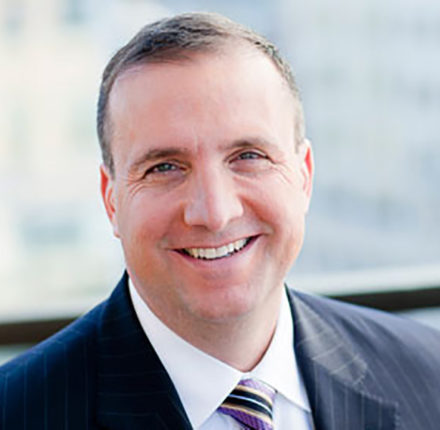 Howard Schweitzer
Chief Executive Officer
About Cozen O’Connor Public Strategies
Cozen O’Connor Public Strategies, an affiliate of the international law firm Cozen O’Connor, is a bipartisan government relations practice representing clients before the federal government and in cities and states throughout the country. With offices in Washington D.C., Richmond, Albany, New York City, Philadelphia, Harrisburg, Chicago, and Santa Monica, the firm’s public strategies professionals offer a full complement of government affairs services, including legislative and executive branch advocacy, policy analysis, assistance with government procurement and funding programs, and crisis management. Its client base spans multiple industries, including healthcare, transportation, hospitality, education, construction, energy, real estate, entertainment, financial services, and insurance.
About Cozen O’Connor
Established in 1970, Cozen O’Connor has over 775 attorneys who help clients manage risk and make better business decisions. The firm counsels clients on their most sophisticated legal matters in all areas of the law, including litigation, corporate, and regulatory law. Representing a broad array of leading global corporations and middle-market companies, Cozen O’Connor serves its clients’ needs through 31 offices across two continents.
Explore Articles and News
See All News-
Pennsylvania Perspective for Thursday, September 17, 2026
September 17, 2026
Pennsylvania PA Attorney General Sunday Charges Multimillion-Dollar Marijuana Ring Attorney General Dave Sunday announced criminal charges against 12 individuals accused of operating an $18.7...Read More -
Broad Street Brief: September 17, 2026
September 17, 2026
City Hall City Council Turns to Fall Priorities After Budget Season Philadelphia City Council returned for its fall session with a full agenda following...Read More -
Illinois Insights: An Update from Cozen O’Connor (9/16)
September 16, 2026
ILLINOIS AROUND THE STATE Illinois, Chicago sue to block Trump plan to restrict green cards to legal Medicaid, SNAP users “The state of Illinois...Read More