“President Donald Trump is actively campaigning in the final weeks of the midterm election cycle to try to sway voters to support the Republican ticket. However, that doesn’t mean he’s backing off on some of his less popular policies.” — Howard Schweitzer, CEO, Cozen O’Connor Public Strategies
The Cozen Lens
-
Despite his general ideological flexibility, President Trump isn’t budging on some major issues that could affect the midterms.
-
Taxes are a major subject of ballot measures in states across the country this year, most notably in California, where voters will decide on adopting a proposed first-in-the-nation wealth tax.
-
Key health committees in Congress will have new leaders and members, regardless of who wins in November.
Subscribe to Cozen Currents
It’s Still Trump’s Washington
Trump’s Hot Takes. President Trump is holding firm on a few key issues notwithstanding their potential midterm implications.
-
President Trump is a populist and generally willing to go where political winds blow. That means the new GOP has occasionally contrasting perspectives: supporting deregulation like before, but willing to buck institutional norms to get it done; continued concern about the national debt, but with promises not to touch Medicare or Social Security because that’s simply unpopular.
-
Trump’s flexibility has historically been a strength, letting him discard or deemphasize party positions that don’t win with the public. On abortion, for example, he’s a relative dove to much of the GOP, whose position on the topic is often dogmatic. He supports government-negotiated drug pricing, opposed by free-market conservatives. It’s allowed him to adapt to the many events and changes of the past decade.
-
But the president has taken a handful of policy positions even when his team tells him not to or when they’re not widely popular. He ran on ending forever wars but has been active in his second term in using the military. He’s been pro-data centers, likely because of the short-term economic stimulus they create and the need to counter China. Though it’s worth noting that he’s okay with Republicans opposing his stance on data centers — a stark contrast to his demands of absolute loyalty on other policy issues.
Import Taxes. Trump’s imposition of tariffs seems to be hurting the GOP on the affordability issue.
-
Tariff is famously his “favorite word,” and the “most beautiful” one in the dictionary. For Trump, trade deficits are tantamount to losses on a balance sheet. Despite being very upfront about it, he went further than many anticipated — as far as he could possibly go — until markets stopped him in April 2025. He didn’t use this year’s Supreme Court ruling to remove them; he doubled down. He started a trade war with Canada two months ago. With the trade deficit at record levels, his impetus for imposing tariffs isn’t going away.
-
At a time when affordability is by far the top concern in politics, over 70 percent of those concerned about affordability believe tariffs raise the prices they pay for a range of goods and services. Various sources estimate the increased import taxes cost the average household around $1,000 a year.
-
Only around one in five Americans support the higher tariffs on Canadian goods. In perennial swing state Michigan, 64 percent disapprove, including 73 percent of Independents. In Iowa, 74 percent say administration actions have increased the cost of living, and 55 percent say tariffs are bad for Iowa. In these states, plus Maine and Ohio, another survey finds his handling of trade with Canada is worse than his overall approval, and supporting tariffs was a net electoral liability in every state.
Data Centers and Shots. Trump’s support for AI and data centers and adoption of vaccine skepticism are further anchors.
-
Even within the GOP, there’s hardly a more pro-AI, pro-deregulation, pro-data center politician than the president, at a time when AI is highly unpopular. Republican voters oppose data centers in their community and support pausing AI development. Trump’s disapproval ratings on AI specifically are 67 percent, again, much higher than his overall disapproval. As analyst Harry Enten colorfully explains: “You would have to combine Jacques Cousteau with The Little Mermaid to get as far underwater as Donald Trump is with independents on AI” (61 points underwater, if you were wondering). That’s true in the swing states too. In Pennsylvania, 64 percent of registered voters oppose constructing data centers to support AI. In the key Ohio Senate race, voters think the Democratic candidate would do a better job on data centers by eleven points.
-
Then there are vaccines. Trump’s personal 2024 campaign pollster found last December that “vaccine skepticism stands as an outlier, rejected by most voters even within the Make America Healthy Again (MAHA) movement.” A few months of more restrained policymaking and messaging followed, but tension was always bubbling under the surface, ready to return. It was Trump who pushed Health and Human Services (HHS) Secretary Robert F. Kennedy Jr. to redouble his efforts to look into the alleged link between vaccines and autism in July. White House political advisers had previously told RFK Jr. to turn down the shot talk ahead of the midterms. In August, HHS launched a new effort to reduce the number of universally recommended vaccines. Now RFK Jr. is eyeing a new large federal effort to address vaccine injuries. Just a quarter of Americans believe these policy shifts are based on science, and more than three-quarters support childhood vaccinations. Half of voters say they view Republicans in Congress less favorably after hearing about recent measles outbreaks or efforts studying the links between autism and vaccines. Democrats hold a sixteen-point advantage in which party voters trust more to handle vaccine policy. RFK Jr.’s approval rating is underwater, and his handling of vaccines specifically is even worse. Even self-proclaimed MAHA voters say healthcare costs should be the main priority and only narrowly approve of Kennedy. In one poll of Pennsylvania following a chain of measles deaths there, 61 percent were unfavorable toward Kennedy. He was the only person listed in the poll who was more unpopular than Trump.
Taxes on the Ballot at the State Level
California’s Tax Fight. The California ballot this year includes five propositions on taxes.
-
Prop 40 would levy a one-time five percent tax on billionaires’ wealth, with most of the revenue going to public health insurance. Outgoing Governor Gavin Newsom (D) and Democratic gubernatorial candidate Xavier Becerra have come out against it and polling suggests an uphill climb. Two other ballot measures seek to defang Prop 40.
-
Even if it fails, Prop 40 could inspire a push for a national wealth tax among Democrats ahead of the 2028 presidential election. It sets a precedent by making a wealth tax tangible rather than purely theoretical.
-
In addition to the first-in-the-nation wealth tax, California voters will also consider ballot measures on more traditional tax topics. Prop 3 would make permanent a temporary higher tax bracket on the top two percent of taxpayers that funds education, currently set to expire in 2030. On the other hand, Prop 43 would raise the threshold for enacting new local taxes via a citizen-led ballot initiative from a simple majority to a two-thirds supermajority.
Taxes Beyond California. Taxes are a major theme of state ballot measures across the country.
-
In Colorado, voters will decide whether to replace the state’s 4.4 percent flat tax with new graduated tax brackets for higher earners. A tax rate of 7.4 percent would kick in for income over $500,000 and gradually increase to 8.4 percent for income over $1 million.
-
In other states, voters will weigh in on ballot measures to cut taxes or make new taxes more challenging to enact. In Washington state, a ballot initiative would kill a new 9.9 percent tax on incomes over $1 million, signed into law earlier this year, and block future state and local income taxes (the tax also faces a legal challenge). An Iowa ballot measure would require a two-thirds vote of both chambers of the state legislature to raise taxes, while one in Utah would set a 60 percent threshold for passage of ballot initiatives to create new taxes or raise tax rates. In Massachusetts, a ballot question would make revenue from a 4.4 percent surtax on incomes over $1 million subject to the state’s revenue cap.
Post-election Healthcare Leadership Shakeup Guaranteed
Turnover Coming. A number of key health leaders in Congress are not returning to Congress next year.
-
To start, Senate Health, Education, Labor, and Pensions (HELP) Committee Chair Bill Cassidy (R-LA), a key health policy leader in the Senate, is on the way out. President Trump played a huge role in ending Senator Cassidy’s Senate career by endorsing a primary opponent who was ultimately successful. While Cassidy was the critical vote in getting RFK Jr. confirmed in the position, he has consistently opposed many of Kennedy’s policies and sunk a few of the administration’s nominees for executive branch health officials. Cassidy got concessions in return for his vote that later seemed to be violated, and the two have repeatedly clashed on vaccinations.
-
One of the potential HELP Committee members who could take the top Republican spot is the founder of the MAHA caucus: Senator Roger Marshall (R-KS). Marshall introduced the Better Food Disclosure Act last year, which would fully recast how the Food and Drug Administration (FDA) evaluates the safety of food additives. Marshall is also in a race for his re-election, so that’s his obvious first priority. Other members of the HELP Committee have higher seniority than Marshall — Senators Lisa Murkowski (R-AK), Rand Paul (R-KY), Susan Collins (R-ME), and Tim Scott (R-SC) — but each already chairs a major committee and would likely have to give up their current plum position to take another. Murkowski is reportedly interested in the job, while Paul has been indefinite in his plans. If Collins’ wins re-election, it is highly doubtful she would give up being the top Republican on the Appropriations Committee to lead HELP.
-
The other wild card who could become the top Republican on HELP is Senator Josh Hawley (R-MO). That would mean a populist, pro-drug-pricing reform Republican would be their top member on the health committee. The Fair Prescription Drug Prices for Americans Act, which he cosponsored, would prohibit pharmaceutical companies from selling drugs in the US at higher prices than an international average, with stiff civil monetary penalties ten times the difference in list price between the US and international price. President Trump’s support for drug pricing reforms has been waylaid by traditional Republicans in Congress, who prefer a free market approach. Selecting a sympathetic GOP member to champion the issue in the upper chamber could make it a rare bipartisan issue, with support from both Democrats and the White House.
On the Other Side. Democrats are gearing up to take the majority in both chambers, with some old faces and some new ones.
-
The ranking member on the Democratic side of the HELP Committee is Senator Bernie Sanders (I-VT), who would presumably become chair if Democrats flip the chamber. But both sides of the aisle could find common ground in cracking down on various slices of healthcare. Senator Josh Hawley (R-MO) also cosponsored another bipartisan bill targeting pharmacy benefit managers, as well as working in a bipartisan manner with Senator Richard Blumenthal (D-CT) to address Medicare Advantage’s use of prior authorization in denying care. Medicare Advantage firms’ use of prior authorization has also drawn scrutiny from Hawley.
-
The House of Representatives is seeing even more turnover on committees with health care jurisdiction. While both the lead Democrat, Frank Pallone (D-NJ), and lead Republican, Brett Guthrie (R-KY), are expected to maintain their positions, the House Energy and Commerce Committee Subcommittee on Health is losing its ranking member. Representative Diana DeGette (D-CO), who sought her 16th term in one of the bluest districts in the country, was defeated in the Democratic primary by Melat Kiros, a democratic socialist who would be the first Generation Z woman elected to Congress. Kathy Castor (D-FL) is the next likely choice to lead Democrats on the Committee should she win her competitive race in Florida’s 14th district. Emergency room physician, Representative Raul Ruiz (D-CA), is also seeking the position, though Castor outranks him in seniority if she returns to the 120th Congress. More broadly, there will be new members on the Energy and Commerce Committee no matter which party controls Congress because of non-returning members, but if Democrats win the majority in the House, there may be 10 or more new Democratic committee members. Republican leadership on the Health Subcommittee is expected to remain the same with Representative Morgan Griffith (R-VA) likely to return as the top Republican.
-
The House Ways and Means Committee is expected to experience significant turnover in the 120th Congress, which will have an impact on healthcare policy. Full committee leadership is expected to stay the same, with Representative Jason Smith (R-MO) expected to serve as the top Republican and Representative Richard Neal (D-MA) as the top Democrat on the committee. Where change in leadership will be seen is within the Ways and Means Committee’s health subcommittee. Representative Vern Buchanan (R-FL), chair of the subcommittee, is retiring, leaving a vacancy for the top Republican spot. Likely contenders for his place include Representative Adrian Smith (R-NE) and Representative Mike Kelly (R-PA), with Smith as the more likely pick due to seniority and committee positioning. On the Democratic side, Representative Lloyd Doggett (D-TX), ranking member of the health subcommittee, is also retiring, leaving an opening for Representative Mike Thompson (D-CA) or Representative Terri Sewell (D-AL) to take his place. Thompson is the more likely pick, should he win reelection, with Sewell the next option, should he not. Looking at the full committee lineup for the Democrats, expect significant changes, with at least five current members not returning to the committee and several others in very competitive races. Moreover, should Democrats regain control of the House, the party would likely gain seven additional seats on the Committee, offering new opportunities for members to join this powerful panel.


Authors
-
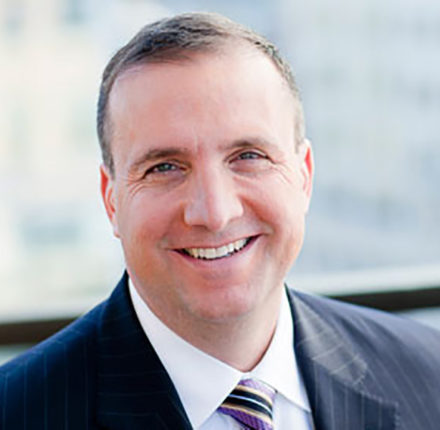 Howard Schweitzer
Chief Executive Officer
About Cozen O’Connor Public Strategies
Cozen O’Connor Public Strategies, an affiliate of the international law firm Cozen O’Connor, is a bipartisan government relations practice representing clients before the federal government and in cities and states throughout the country. With offices in Washington D.C., Richmond, Albany, New York City, Philadelphia, Harrisburg, Chicago, and Santa Monica, the firm’s public strategies professionals offer a full complement of government affairs services, including legislative and executive branch advocacy, policy analysis, assistance with government procurement and funding programs, and crisis management. Its client base spans multiple industries, including healthcare, transportation, hospitality, education, construction, energy, real estate, entertainment, financial services, and insurance.
About Cozen O’Connor
Established in 1970, Cozen O’Connor has over 775 attorneys who help clients manage risk and make better business decisions. The firm counsels clients on their most sophisticated legal matters in all areas of the law, including litigation, corporate, and regulatory law. Representing a broad array of leading global corporations and middle-market companies, Cozen O’Connor serves its clients’ needs through 31 offices across two continents.
Explore Articles and News
See All News-
Cozen Currents: Trump’s Gonna Trump
October 20, 2026
“President Donald Trump is actively campaigning in the final weeks of the midterm election cycle to try to sway voters to support the Republican...Read More -
Rodney Whitlock Joins Harvard Chan Panel on Public Health and the Midterms
October 20, 2026
Rodney Whitlock, managing director of Cozen O’Connor Public Strategies’ federal health policy practice, joined fellow health policy experts for a panel discussion at Harvard...Read More -
Pennsylvania Perspective for Monday, October 19, 2026
October 19, 2026
Pennsylvania PA Governor Shapiro Launches Federal PAC Governor Josh Shapiro has established a federal political action committee, New Path PAC, enabling him to raise...Read More