“Continuing polarization has made it increasingly difficult to remain a moderate in modern day Washington, but the Senate lends itself to serving as a refuge for legislators with an independent streak.” — Howard Schweitzer, CEO, Cozen O’Connor Public Strategies
The Cozen Lens
- The Senate has always had its share of mavericks, but not all independent streaks are the same. Whether a lawmaker breaks with their party out of electoral necessity or for personal branding can determine the impact of their independence.
- Unions historically have been a cornerstone of the Democratic coalition. Since President Donald Trump’s 2024 campaign, however, the labor movement’s support has been more fiercely contested between the two major parties.
- California Governor Gavin Newsom’s (D) final budget is more than a fiscal document for the world’s fourth-largest economy. It serves as an early blueprint of how he would likely run for president and govern nationally.
Subscribe to Cozen Currents
Declaration of Independents
The Maverick Playbook. While former Senator John McCain (R-AZ) popularized the idea, the modern template for Senate independence was written by former Senators Joe Manchin (I-WV) and Kyrsten Sinema (I-AZ), who leveraged Democrats’ slim Senate majority in the 117th Congress to extract major policy concessions.
- Manchin’s independence was an electoral necessity as much as it was part of his ideological branding. Representing a state that President Trump won by roughly 30 points in 2016 and 2020, Manchin was a hallmark of a different era in West Virginia politics. That led Manchin to vote against his party at the highest rate of any Democrat between 2020 and 2024, a dynamic that frustrated Democrats and their plans to enact major policy changes. But Manchin also frequently played ball with party leadership, using his leverage to reshape legislation with a singular focus of lessening its impact on the deficit, best exemplified by his rewrite of Democrats’ signature bill, the Build Back Better Act, into the Inflation Reduction Act.
- While Sinema developed a similar maverick identity to Manchin, often second to only Manchin in the frequency with which she voted against Democrats, her independence wasn’t born out of the same electoral necessity. Although Arizona is a swing state, it trended toward Democrats during Sinema’s tenure, electing the more partisan Senator Mark Kelly (D-AZ) and Governor Katie Hobbs (D-AZ). Sinema was able to similarly leverage her independence for real policy concessions – she helped lead the 2022 bipartisan gun safety bill, preserved the so-called carried interest loophole, and prevented the inclusion of certain marginal tax increases in Democrats’ signature bill. However, Sinema gradually drew significant intraparty resentment, which ultimately led to her effective replacement with Senator Ruben Gallego (D-AZ), an ideological moderate but more partisan Democrat.
Today’s Mavericks. Senator John Fetterman (D-PA) is frequently cited as the Democrats’ Senate maverick of the current Congress. However, the extent to which he uses his ideological independence to secure major policy concessions is much lower in practice than that of Sinema or Manchin during their time.
- Fetterman frequently breaks with Democrats both rhetorically and legislatively on cultural flashpoints like funding for Israel, the Iran conflict, the White House ballroom and reflecting pool projects, and the confirmation of President Trump’s cabinet nominees. But unlike Manchin or Sinema, Fetterman rarely uses his independence to secure major policy concessions or shape legislation, making his maverick identity more a matter of brand than of impact, a dynamic that’s more pronounced by Democrats’ position in the Senate minority.
- Because Fetterman’s divisions with Democrats center on hot-button issues, his independence has received outsized attention relative to its scope. Politico reports that President Trump and GOP senators have engaged in a sustained campaign to sway him to switch parties, and speculation is growing that he could change sides following the midterms. But Fetterman has repeatedly denied those rumors, writing in a Washington Post op-ed this year, “I’d be a terrible Republican who still votes overwhelmingly with Democrats.” Case in point, a CQ Roll Call analysis of 2025 votes found he voted with the party 79 percent of the time.
- Opposite Fetterman on the GOP side of the aisle are Senators Susan Collins (R-ME) and Lisa Murkowski (R-AK), who both represent states where breaking with the president can be of electoral benefit. Both vote frequently with their party – much more so than Fetterman or even Gallego. However, unlike Fetterman, they’ve used their independence in institutionally consequential ways. Both Collins and Murkowski used their leverage to reshape the rural healthcare and nutrition benefit portions of the One Big Beautiful Bill Act, and both are currently using their leverage to limit extraneous provisions in the current immigration-focused reconciliation bill.
The Next Generation. While at least Fetterman and Murkowski will be around for several more years, the 2026 midterm cycle is producing at least two candidates who could embody the maverick persona in their own ways should they win in November.
- At the top of everyone’s radar is oysterman Graham Platner, a veteran and presumptive Democratic nominee against Collins in Maine. He has combined populism and progressivism into a perceived independent streak, running explicitly against the Democratic establishment and its formerly preferred nominee, Governor Janet Mills (D-ME). But Platner is more of an anti-establishment progressive than a traditional, moderate ideologue and independent. On the campaign trail, Platner has made it clear that he could deviate culturally from establishment Democrats if elected, particularly on gun politics. However, his overarching policy platform is firmly progressive, and the party establishment is lining up behind him to win in Maine.
- While a longer shot to win, the more distinctively independent candidate of the 2026 cycle is Dan Osborn in Nebraska, a registered independent, Navy veteran, and union organizer running against Republican Senator Pete Ricketts (R-NE). Similar to his last campaign, Osborn is running as a true independent, promising not to caucus with either party if elected. His policy platform includes support for some of the administration’s border security policies, promises to tackle corruption in Washington, and a focus on reducing the national debt.
The State of the Unions
Shifting Political Allegiances. President Trump reset the GOP’s relationship with organized labor in his 2024 campaign.
- Historically, unions have been a cornerstone of the Democratic coalition. Former Senate Majority Leader Harry Reid (D-NV) built a formidable political machine with labor support that kept him in office for decades, including a tough re-election race amid the 2010 Tea Party wave. Even after his death, Reid’s political operation helped Senator Catherine Cortez Masto (D-NV) to rewin her seat in 2022, a challenging midterm year for Democrats.
- Trump made significant inroads with the labor movement in his return to the White House. He narrowed his margin among voters in union households from 16 percentage points in 2020 to only eight points in 2024. Teamsters President Sean O’Brien spoke at the Republican National Convention, a crossing the Rubicon moment for Republicans and the labor movement. O’Brien reportedly speaks often with Trump and after clashing with then-Senator Markwayne Mullin (R-OK) in a 2023 congressional hearing, later applauded his nomination as secretary of Homeland Security this spring.
- The 2026 midterms provide a test of whether Republicans’ gains with labor in 2024 will endure without Trump on the ballot. The stakes are high for Democrats who have traditionally depended on the votes of union members and their political turnout machines.
Evolving Labor Policy. The GOP’s record on policy issues with implications for the labor movement has been mixed under Trump 2.0.
- Some tax cuts in Trump’s signature domestic legislative achievement, the One Big Beautiful Bill Act, were designed to benefit working-class voters. Trump and congressional Republicans delivered on campaign promises to cut taxes on tips and overtime pay.
- Republicans in the narrowly-divided House have given the labor movement some wins recently. Last month, the House Transportation and Infrastructure Committee voted to add the union-backed Railway Safety Act to the surface transportation bill. Seven moderate and populist Republican lawmakers also signed a discharge petition to force a vote on the Faster Labor Contracts Act, which would speed up timelines for collective bargaining with newly-formed unions. Senator Josh Hawley (R-MO) has introduced a Senate version of the bill. In January, a group of House Republicans rejected a business-friendly bill on calculating work hours, forcing House GOP leadership to walk away from plans to vote on other labor bills.
- Elements of Trump’s approach to labor during his second term resemble more conventional Republican positions. His initial selection for secretary of Labor, then-Representative Lori Chavez-DeRemer (R-OR), was a more labor-friendly Republican. However, her replacement as acting secretary, Deputy Secretary of Labor Keith Sonderling, is a more traditional conservative choice. Sonderling previously served in the Department of Labor and Equal Employment Opportunity Commission during Trump’s first term. Trump’s most recent nominee to the National Labor Relations Board, James Macy, is a management-side labor lawyer. Trump also signed an executive order to eliminate collective bargaining rights for federal labor unions last year (which some House Republicans voted to overturn).
Newsom Lays Some Markers
Budget as Biography. Governor Gavin Newsom’s (D-CA) revised budget reads like an argument for what a national Newsom campaign would be: fiscally careful, socially liberal but moderated, and focused on affordability.
- The Golden State passed Japan last year to become the world’s fourth-largest economy if treated as an independent country. It also contains more than one in ten Americans, Hollywood’s cultural power, and Silicon Valley’s technological center. When Washington stalls, California often moves first, which means its choices can become de facto national standards for companies operating nationwide.
- Newsom is term-limited, but he still has over a half-year left in office, and he wants to leave a mark. The result is a budget that doubles as a political document. Newsom is trying to show that he can protect Democratic priorities while making hard choices, answering the familiar Republican attack that California liberalism is fiscally indulgent or unworkable — or both. The new revenue is not framed as a broad-based soak-the-rich campaign, but it is still meaningfully tougher on business. This is likely to be central to any 2028 pitch: California values, but with enough fiscal restraint and immigration moderation to survive a national campaign.
- The clearest affirmative priority is affordability. Newsom proposes $300 million to strengthen California’s health insurance marketplace, mirroring federal Democrats’ attacks on Republicans for not extending enhanced Affordable Care Act premium subsidies. The money would lower costs for middle-class residents and help cover premiums for low-income residents, giving Newsom a concrete achievement on lowering prices to cite in a 2028 campaign.
- Newsom’s budget would also shift 1.3 million undocumented immigrants from the state’s Medicaid program, known as Medi-Cal, to a fee-for-service alternative with fewer benefits. The budget would also raise Medi-Cal monthly premiums for undocumented adults from $30 to $50. Not only does this save the state money, but it also gives Newsom some material to defend himself against potential attacks of being too progressive on immigration.
Silicon Valley Recalibration. Newsom is not outright breaking with California’s tech industry, but he is repositioning himself as someone willing to adopt populist critiques of AI, price-setting algorithms, and consumer abuses.
- Newsom’s relationship with Silicon Valley has long been more protective than punitive. His interests often aligned with those of tech executives, and he has used vetoes to block some of the legislature’s most aggressive proposals. In 2024, he vetoed a bill that would have created legal liabilities for AI companies. He also vetoed data center energy and water disclosure bills, reinforcing the view that he has been cautious about imposing new burdens on a sector central to California’s economy.
- But Newsom is now trying to occupy a more populist lane on AI. He recently signed an executive order requiring state agencies to work with industry groups, academics, and organized labor to develop plans to assess and offset AI’s effects on California workers. His revised budget points in the same direction by vastly increasing antitrust enforcement funding, including resources used to pursue companies that rely on algorithms to set prices. That connects AI and tech policy to the issue that Democrats most want to own nationally: affordability.
- Newsom tapped former Consumer Financial Protection Bureau Director Rohit Chopra to lead the state’s new Business and Consumer Services Agency. As the first leader of a newly-created agency overseeing Silicon Valley, Chopra will help define how far California can push consumer protection while federal law preempts some state action. This appointment suggests that a Newsom presidency could pick up where former President Biden left off with his consumer finance regulatory agenda.
- For companies, the implication is that Newsom’s California will remain open to innovation but be more willing to police spillovers: worker displacement, algorithmic price-setting, consumer finance abuses, and infrastructure costs tied to AI and data centers. For a presidential campaign, the implication is sharper: Newsom is likely to run as a pro-growth Democrat who wants to discipline corporate power without sounding avowedly anti-tech. That may be the platform he hopes can bridge California, Silicon Valley, and a national electorate increasingly nervous about AI.


Authors
-
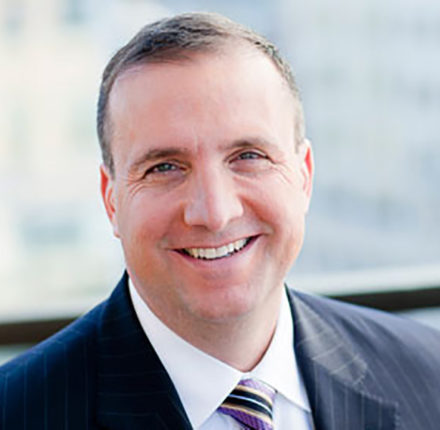 Howard Schweitzer
Chief Executive Officer
About Cozen O’Connor Public Strategies
Cozen O’Connor Public Strategies, an affiliate of the international law firm Cozen O’Connor, is a bipartisan government relations practice representing clients before the federal government and in cities and states throughout the country. With offices in Washington D.C., Richmond, Albany, New York City, Philadelphia, Harrisburg, Chicago, and Santa Monica, the firm’s public strategies professionals offer a full complement of government affairs services, including legislative and executive branch advocacy, policy analysis, assistance with government procurement and funding programs, and crisis management. Its client base spans multiple industries, including healthcare, transportation, hospitality, education, construction, energy, real estate, entertainment, financial services, and insurance.
About Cozen O’Connor
Established in 1970, Cozen O’Connor has over 775 attorneys who help clients manage risk and make better business decisions. The firm counsels clients on their most sophisticated legal matters in all areas of the law, including litigation, corporate, and regulatory law. Representing a broad array of leading global corporations and middle-market companies, Cozen O’Connor serves its clients’ needs through 31 offices across two continents.
Explore Articles and News
See All News-
Pennsylvania Perspective for Thursday, June 25, 2026
June 25, 2026
Pennsylvania Budget Deadline Approaches on June 30 With Pennsylvania’s fiscal year expiring on June 30, state lawmakers face a multi-billion dollar structural deficit as...Read More -
Broad Street Brief: June 25, 2026
June 25, 2026
City Hall Council Proposes New Office Focused on Food Equity and Insecurity City Council President Kenyatta Johnson introduced a proposal to create a permanent...Read More -
New York Note Special Edition: NYS 2026 Primary Election Results
June 24, 2026
The 2026 New York State primary elections were held yesterday, June 23. All of the candidates endorsed by Mayor Zohran Mamdani won their primary...Read More