Pennsylvania
Budget Deadline Approaches on June 30
With Pennsylvania’s fiscal year expiring on June 30, state lawmakers face a multi-billion dollar structural deficit as negotiations stall over Governor Josh Shapiro’s proposed $53.3 billion spending plan. The House-approved budget represents a 6.4% spending increase driven primarily by rising Medicaid social service costs and mandated court-ordered public school adequacy payments. To balance the ledger without politically unpopular tax hikes, Governor Shapiro has requested a $4.7 billion drawdown from the state’s nearly $8 billion “rainy day” stabilization fund, alongside anticipated new revenue lines from a proposed 52% tax on newly classified electronic skill games after the state Supreme Court found that skill games are subject to regulation and legalizing recreational marijuana. Senate Republicans remain resistant to tapping emergency reserves and are instead pushing to slash overall state expenditure caps across safety-net programs to curb structural spending. Click here for City & State’s 2026-27 Pennsylvania state budget tracker for recent updates.
Subscribe
Governor Shapiro and Treasurer Garrity Express Willingness to Hold Debates
Incumbent Governor Josh Shapiro and Republican gubernatorial candidate and state Treasurer Stacy Garrity have both signaled their willingness to participate in a face-to-face public debate ahead of November’s general election, potentially breaking a gubernatorial debate hiatus that has lasted since 2018. Treasurer Garrity called for seven distinct televised debates, one in each of the commonwealth’s major media markets. The Shapiro campaign has resisted finalizing terms or issues through the media, maintaining that any debate parameters must be established via direct, good-faith logistical discussions rather than public press releases.
House Lawmakers Pass Legislation on Regulating Data Centers
The Pennsylvania House passed bills allowing municipalities to enact six-month development moratoriums, conditioning data center tax benefits, and eliminating tax exemptions on computer equipment for data centers. HB2496 grants local officials time to update zoning codes, and HB2650, aligned with Governor Josh Shapiro’s GRID standards, forces data centers to meet noise, water, and infrastructural energy standards to qualify for state assistance. The House also passed HB2198 to eliminate the state’s sales tax exemption on computer equipment.
Philadelphia
Mayor Parker Requests $250 Million for State School Renovation Fund
During a two-hour news conference at the state Capitol in Harrisburg, Philadelphia Mayor Cherelle Parker unified with City Council President Kenyatta Johnson and School Superintendent Tony B. Watlington Sr. to request that Pennsylvania lawmakers double the state’s school facility renovation fund from $125 million to $250 million in the upcoming budget. The funding expansion is intended to help finance the Philadelphia School District’s $3.3 billion modernization plan for 169 aging school buildings, an initiative that includes closing 17 local schools following public controversy over building infrastructure failures like climate control issues. Backed by joint advocacy letters from urban and rural school coalitions, Mayor Parker emphasized that dilapidated school infrastructure is a statewide crisis affecting rural and suburban districts alike. However, the proposal faces an uphill fiscal battle because Governor Josh Shapiro’s $53.2 billion budget pitch keeps the renovation pot at $125 million, and state projections already show Pennsylvania on track to run a $4.3 billion structural deficit by spending more than its projected annual revenue.
State Attorney General’s Office Intervenes to Appeal Overturned Murder Case
The Pennsylvania Attorney General’s Office filed an appeal to intervene in the case of Marc Brittingham, Rasheed Smith, and Jermal Shuler, marking the first procedural application of a state Supreme Court ruling designed to increase oversight on Philadelphia District Attorney Larry Krasner’s office. The three men were released in May after serving 28 years for a 1997 fatal stabbing, following a joint push by defense lawyers and local prosecutors who concluded that newly uncovered, redacted disciplinary records concerning an assistant medical examiner rendered the original trial timeline unreliable. Utilizing a 30-day legal window before Common Pleas Court Judge Jennifer Schultz’s order became final, Deputy Attorney General Hugh Burns filed an intervention notice on day 29, directly responding to the high court’s recent mandate requiring judges to notify state prosecutors before overturning convictions. While District Attorney Krasner publicly urged close tracking of the competing philosophies between the state and local agencies, independent legal scholars noted that the retroactivity of the intervention remains legally untested, questioning whether state officials fully evaluated the specific merits of the underlying evidence or acted prematurely without a formal judicial invitation.
Pittsburgh
Allegheny County Council Approves Expanded Spending and Resources
The Allegheny County Council voted 9–6 to place two amendments to the Home Rule Charter on the November ballot, giving voters the opportunity to eliminate the body’s long-standing spending cap and expand legislative resources. If approved, the measures would remove historical charter constraints to allow council members to draw from county funds to hire dedicated staff, rent localized district offices, and receive taxpayer-funded benefits. The decision to advance these changes comes one year after a 36% county property tax increase and amid warnings of necessary fiscal belt-tightening from the county controller, dividing lawmakers along operational lines.
City Council Passes Tax on Local Gaming Terminals
Pittsburgh City Council unanimously approved a tiered local tax on mechanical amusement devices, seeking to establish a $2 million to $3 million annual revenue stream to assist with a projected $24.4 million municipal budget deficit. The fast-tracked legislation institutes a flat annual licensing fee of $1,000 per video gaming terminal, commonly known as skill games, $100 for prize-dispensing amusement devices like claw machines, and $10 for general entertainment tables like pool and darts. However, local authority to collect this revenue remains uncertain following a recent Pennsylvania Supreme Court ruling that classified unregulated skill games as slot machines under the state’s Gaming Act, which explicitly prohibits municipalities from independent gambling taxation. Anticipating that the ruling will prompt state lawmakers to finalize their own gambling regulations, with Governor Josh Shapiro proposing a 52% state revenue tax compared to a 36% counter-proposal by Republican leadership, city officials deliberately hurried the local passage in hopes of being grandfathered in or gaining leverage to lobby for a direct portion of future state-collected gaming revenue.
Public Schedules Highlight Mayor O’Connor’s Policy Priorities, Civic Engagement
An analysis of 104 daily public schedules published during Mayor Corey O’Connor’s first five months in office reveals a primary administrative focus on business development, public safety, housing, and youth education. The compiled records track over 500 public events spanning 51 of Pittsburgh’s 90 neighborhoods, with Downtown and the North Shore, the latter hosting the April 2026 NFL Draft, serving as the mayor’s most frequent operational destinations. The documented activities highlight a high level of direct civic outreach and media availability, including 51 news interviews, 17 business ribbon cuttings, and 21 separate rounds of calls to thank local business owners. Although these daily logs are not legally mandated and do not capture every impromptu meeting, local government observers note that the routine publication of the schedules represents a distinct shift toward administrative transparency compared to the previous mayoral administration.
Federal
President Trump Visits Pennsylvania and Mack Trucks Facility
President Donald Trump visited a Mack Trucks assembly facility in Macungie, Pennsylvania, marking his first major public appearance outside Washington, D.C., since signing an interim agreement to halt the conflict with Iran. Speaking from the factory floor to promote local reindustrialization, President Trump focused on his administration’s economic record, job creation, and trade policies, though his remarks frequently shifted toward personal grievances and mid-decade campaign themes. The high-profile visit served as a targeted effort to aid the U.S. Representative Ryan Mackenzie (R-PA-7) in a highly competitive congressional district battle against Democrat Bob Brooks, though observers noted that President Trump notably omitted mentioning endorsed gubernatorial candidate Stacy Garrity during the event.
Bipartisan Housing Bill Halted as President Trump Conditions Signature on SAVE Act
The future of the 21st Century ROAD to Housing Act is uncertain after President Donald Trump abruptly canceled a scheduled U.S. Capitol signing ceremony, stating he will withhold his signature until the Senate passes the Safeguard American Voter Eligibility (SAVE) Act. The comprehensive housing package, which passed both congressional chambers with large majorities, includes zoning deregulation, limits on corporate ownership of single-family homes, and a national Whole-Home Repairs pilot program modeled directly after Pennsylvania’s popular state-level housing preservation framework. The sudden delay drew widespread criticism from the majority of Pennsylvania’s congressional delegation, including state Senator Nikil Saval (D-1), Allegheny County Executive Sara Innamorato, and U.S. Representatives Chrissy Houlahan (D-PA-6), Chris Deluzio (D-PA-17), Summer Lee (D-PA-12), and Mary Gay Scanlon (D-PA-5), who characterized the move as an unnecessary disruption during a national housing affordability crisis. Representative Scott Perry (R-PA-10) defended his lone dissenting vote in the Pennsylvania delegation against the package, while Senators John Fetterman (D-PA), who previously introduced a federal version of the Whole-Home Repairs program in 2024, and Dave McCormick (R-PA) have not commented on the president’s decision despite voting in favor of the package.
Senator Fetterman on Progressive Democrat Primaries Victories, Iran Vote, and ICE Facilities
U.S. Senator John Fetterman (D-PA) has criticized the rise of progressives within the Democratic Party following primary victories by democratic socialists Darializa Avila Chevalier and Claire Valdez over traditional, mainstream Democrats in New York House races. Senator Fetterman rebuked the progressive candidates for platform stances that advocate for abolishing immigration enforcement and local police forces, while also accusing their progressive endorsements of holding anti-Israel sentiments. Senator Fetterman also broke party ranks on foreign policy, casting the lone Democratic dissenting vote against a symbolic 50–48 Senate war powers resolution aimed at blocking U.S. military action in Iran. Despite these foreign policy and ideological rifts with his caucus, Senator Fetterman celebrated the Department of Homeland Security’s decision to cancel plans for two massive ICE immigration detention centers in Berks and Schuylkill counties, which federal officials now intend to divest after local pushback regarding municipal tax and infrastructure strains.
President Trump to Headline Senator McCormick’s Defense Summit
President Donald Trump is scheduled to headline the upcoming Pennsylvania Defense and Innovation Summit, hosted by U.S. Senator Dave McCormick (R-PA) at the U.S. Army War College in Carlisle on July 15. The high-profile, two-day conference will bring together senior U.S. military leaders, administration officials, and defense industry investors with chief executives from prominent technology and manufacturing firms. Designed to showcase the commonwealth’s domestic production base and establish public-private innovation partnerships, the convention marks the one-year anniversary of Senator McCormick’s 2025 tech and energy summit in Pittsburgh, which similarly featured President Trump and culminated in $92 billion in private-sector investment commitments for Pennsylvania. JPMorgan Chase Chief Executive Officer Jamie Dimon is set to deliver the keynote address for the gathering, which aims to align private industrial engineering with federal national security priorities to stimulate job growth across local manufacturing and robotics sectors.
Representative Perry Introduces Amendments to Eliminate Peace Corps and Foreign Aid Funding
U.S. Representative Scott Perry (R-PA-10) has proposed amendments to a House national security and State Department appropriations bill aiming to eliminate fiscal year 2027 funding for the Peace Corps and several other international assistance programs. If approved, Representative Perry’s measures would completely defund the Peace Corps, which is currently slated to receive $410.5 million in the draft spending bill, as well as zero out $830 million allocated for the Millennium Challenge Corporation and $205.2 million designated for the global Democracy Fund. The spending elimination push aligns with broader executive efforts to scale back foreign aid and eliminate waste as Congress works toward its September 30 appropriations deadline.
Postmaster General Confirms Plans to Halt Mail Ballot Delivery for Non-Compliant States
Testifying before the Senate Homeland Security and Governmental Affairs Committee, Postmaster General David Steiner confirmed that under a new proposed federal regulation, the U.S. Postal Service will not deliver mail-in ballots for states that refuse to submit lists of anticipated absentee voters to the federal government. This would include Pennsylvania. The regulatory proposal follows a March executive order signed by President Donald Trump designed to combat noncitizen voting, though critics note the mandate could effectively restrict mail voting to Republican-led states if Democratic officials refuse to turn over their voter rolls.


Authors
-
 Radwan Azim
Legislative Analyst
-
 Joseph Hill
Managing Director
-
 Beth A. Brennan
Senior Principal
-
 Jim Davis
Executive Vice President
-
 Samuel Denisco
Senior Principal
-
 Kevin J. Kerr
Principal
-
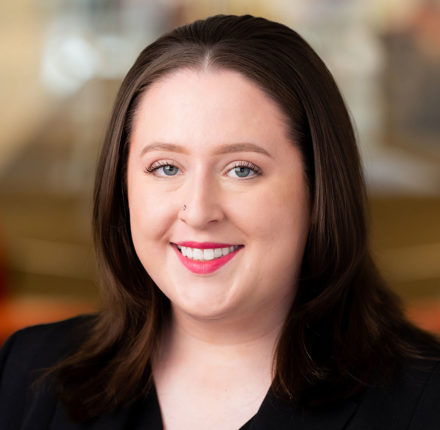 Elizabeth Burdett
Account Executive
-
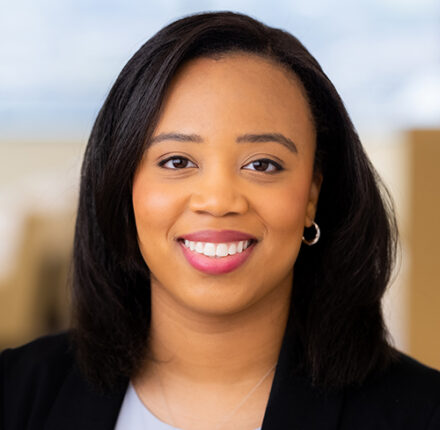 Brianna A. Westbrooks
Principal
About Cozen O’Connor Public Strategies
Cozen O’Connor Public Strategies, an affiliate of the international law firm Cozen O’Connor, is a bipartisan government relations practice representing clients before the federal government and in cities and states throughout the country. With offices in Washington D.C., Richmond, Albany, New York City, Philadelphia, Harrisburg, Chicago, and Santa Monica, the firm’s public strategies professionals offer a full complement of government affairs services, including legislative and executive branch advocacy, policy analysis, assistance with government procurement and funding programs, and crisis management. Its client base spans multiple industries, including healthcare, transportation, hospitality, education, construction, energy, real estate, entertainment, financial services, and insurance.
About Cozen O’Connor
Established in 1970, Cozen O’Connor has over 775 attorneys who help clients manage risk and make better business decisions. The firm counsels clients on their most sophisticated legal matters in all areas of the law, including litigation, corporate, and regulatory law. Representing a broad array of leading global corporations and middle-market companies, Cozen O’Connor serves its clients’ needs through 31 offices across two continents.
Explore Articles and News
See All News-
Sean Clerget Quoted in Tax Notes on Data Center Tax Proposals
October 23, 2026
Sean Clerget, senior principal of Cozen O’Connor Public Strategies’ tax policy practice and a member of Cozen O’Connor’s congressional investigations practice, was quoted in...Read More -
Pennsylvania Perspective for Thursday, October 22, 2026
October 22, 2026
Pennsylvania PA Legislative Session Concludes with Bills Passed, Others Stalled As the Pennsylvania General Assembly approaches the end of its two-year legislative session, lawmakers...Read More -
Broad Street Brief: October 22, 2026
October 22, 2026
City Hall Council Action Focuses on School Meal Improvement, Parking Fine Amnesty Councilmember Anthony Phillips introduced two resolutions regarding School District of Philadelphia meal...Read More