“Much of the attention since President Donald Trump has returned to the Oval Office has been on his unprecedented expansion of the powers of the presidency. Yet, little attention has been paid to how future presidents, with their own agendas, can and will exercise these powers.” — Howard Schweitzer, CEO, Cozen O’Connor Public Strategies
The Cozen Lens
- In his second term, President Trump has asserted greater executive authority. However, this expansion of presidential power will also be available to the next president, who could be a Democrat such as Rep. Alexandria Ocasio-Cortez (D-NY).
- President Trump is expected to center tonight’s State of the Union address around his administration’s first-year accomplishments, sidestepping much of the forward-looking agenda setting presidents have historically engaged in during midterm years.
- The Department of Health and Human Services (HHS) is facing a major shake-up as the White House looks to retool the agency heading into the midterms and use the Make America Healthy Again (MAHA) movement as an offensive weapon.
Subscribe to Cozen Currents
Imagining President AOC
An AOC Presidential Campaign? Rep. Alexandria Ocasio-Cortez’s (D-NY) recent moves to increase her national profile could lay groundwork for a potential 2028 presidential bid.
- Earlier this month, Ocasio-Cortez (AOC) spoke at the Munich Security Conference. The appearance was her first major overseas trip, a notable development given that she has largely focused on domestic policy. Last year, she barnstormed the country with Bernie Sanders (I-VT) headlining the “Fighting Oligarchy” tour, which solidified her as his political heir apparent.
- Sanders, the current leader of the left wing of the Democratic Party, is 84 years old and will be 89 when his current term ends in 2031. After two presidential campaigns, he’s unlikely to run again, which could leave AOC with a wide-open progressive lane in the race for the 2028 Democratic presidential nomination.
- In a recent interview with Cozen O’Connor Public Strategies’ Beltway & Beyond: In-Conversation podcast series, NBC News’ Steve Kornacki said that AOC would have to be taken seriously in the 2028 primaries due to the political strength of left-leaning young voters within the Democratic coalition, which helped put New York City Mayor Zohran Mamdani over the top last year.
A Swing of the Pendulum. President Trump has shattered norms and expanded executive authority in his second term, but greater presidential power will also be available to a potential future Democratic president such as AOC.
- While it is easier to dismantle institutions than to build them up and faster to wipe away regulations than to develop new rules, the next Democrat in the White House will have a bigger toolbox. Following Trump’s lead, a President Ocasio-Cortez could fire Republican appointees to agencies previously considered independent, such as the Federal Trade Commission or the Federal Communications Commission (assuming the Supreme Court backs the president in a pending case on this topic). AOC could also take a page out of the DOGE playbook and make cuts to agencies disfavored by Democrats, such as Immigration and Customs Enforcement, while restoring those slashed under Trump, such as the Consumer Financial Protection Bureau and the Department of Education.
- During his second term, Trump has sought to cut federal spending in areas he disfavors. While Democrats generally favor greater government spending, a President AOC could use the same impoundment tools. She could instead target areas of spending opposed by the left, such as for the Pentagon or the Department of Homeland Security. Moreover, AOC could reverse the Trump White House’s efforts to use federal dollars as leverage over blue states and universities and even condition federal grants on progressives’ desired policy outcomes, such as diversity, equity, and inclusion (DEI) programs.
An AOC Legislative Agenda. A President AOC’s legislative ambitions would likely surpass former President Biden’s in terms of scope and ideology.
- Ocasio-Cortez would likely push for a turbo-charged version of Biden’s Build Back Better proposal. A champion of the Green New Deal, which called for a transition to 100 percent clean energy sources, AOC would likely push for significant new climate programs. New social spending, such as childcare, paid family leave, and health care coverage (potentially even Medicare for All), would likely be on the agenda. Proposed substantial increases in federal spending would likely be paid for by tax increases on the wealthy, which could include a wealth tax. However, passage of major progressive legislation wouldn’t be easy.
- Biden’s legislative agenda was ultimately slimmed down in order to earn the votes of centrist Sens. Joe Manchin (I-WV) and Kyrsten Sinema (I-AZ), both Democrats turned independents. Both of these Senators are now out of office. If a President AOC took office with Democratic majorities in Congress, there may be fewer moderates within her party to serve as a check. The more progressive makeup of Congress could lead the Senate to eliminate the filibuster (which would reduce the Chamber’s threshold for advancing legislation from three-fifths to a simple majority). This move could greatly increase the likelihood of AOC’s legislative agenda being passed into law.
Trump Puts His Own Spin on SOTU
A Year of Achievements. As President Trump previewed in his Thursday economic address to Georgia voters, today’s State of the Union will focus on the administration’s 13 months of accomplishments with a particular emphasis on undoing the policies of the prior administration.
- Historically, the State of the Union address has served as a unique forum for the president to simultaneously lay out the upcoming year’s legislative agenda and to build public support for that agenda. According to the Congressional Research Service (CRS), the speech serves as an informal mark of the start of the legislative year and often features recurring themes of optimism and bipartisanship. In 2018, President Trump teed up his upcoming policy agenda by saying, “I am extending an open hand to work with members of both parties — Democrats and Republicans — to protect our citizens of every background, color, religion, and creed.”
- This time around, Trump isn’t expected to extend such an olive branch. Instead, the president will focus on the successful reversal of Biden-era policies over the last 13 months. White House Press Secretary Karoline Levitt told reporters last week, “It is going to be a very good and powerful speech…the president is still digging his way out of the mess that was created by Joe Biden’s administration.” Trump previewed the central theme in Georgia on Thursday, saying, “Airfares, hotels, car payments, rent, sports events, groceries, everything’s down, everything’s down, dairy, eggs, potatoes and chicken. Core inflation is now the lowest of any time in more than seven years…I’m going to make a State of the Union address on Tuesday. I hope you’re going to watch, and we’re going to be talking about it.”
- While it’s not uncommon for presidents to put a heavier emphasis on past achievements in midterm year addresses – according to CRS, “…approximately 10% of the sentences in midterm addresses are credit-claiming statements” — Trump’s focus is an outlier even by those standards. The president has repeatedly underscored his disinterest in additional legislative efforts, saying, “…we’ve gotten everything passed that we need for four years” in the One Big Beautiful Bill Act and “we don’t need anything more from Congress.” Trump has long preferred the efficiency and autonomy of executive action over the slow-moving legislative process. While there’s no doubt the president will pitch new legislative proposals in tonight’s remarks, he’s made it clear that they won’t be his top priority.
The Affordability Conundrum. While the president plans to make the economy a centerpiece of his remarks, a focus on addressing affordability continues to play second fiddle to foreign policy matters.
- Since last fall, Trump’s top advisors have been focused on how to address the electorate’s affordability concerns. They presented dozens of ideas to the president on how to address housing costs, suggested a schedule of campaign-style rallies to tout the administration’s economic accomplishments, and recently convened an all hands cabinet meeting to encourage top administration surrogates to travel the country discussing the issue. But Trump has largely ignored those concerns, agreeing to only two of the housing proposals put forward by his advisors and otherwise dismissing affordability concerns as a Democratic hoax.
- Instead, foreign policy has been top of mind for Trump. Over the last several months, the president has shifted his focus multiple times from Venezuela to Greenland to Iran. At present, the White House is simultaneously engaging in bilateral negotiations with the Iranian government while also implementing one of the largest, and according to Politico, most expensive, military buildups in decades. Similar to Trump’s preference for executive orders over legislation, foreign policy matters are an area where the executive largely has unilateral control. This relative autonomy makes foreign policy a more appealing space to engage in for the president.
- While affordability will make an appearance during Trump’s address, it will resemble a “mission accomplished” moment. In Georgia, Trump told rally attendees “They would say affordability, everybody would say, ‘Oh, Trump caused —,’ no, they cause — they cause the affordability problem. And we’ve solved it. And we’re going still lower, but we’ve solved it.”
MAHA’s Midterms Pivot
Musical Chairs at HHS. The Department of Health and Human Services (HHS) is experiencing the greatest leadership staff changes among Cabinet Departments this term.
- While the leaders — HHS Secretary Robert F. Kennedy Jr. and Food and Drug Administration (FDA) Commissioner Marty Makary — remain in place, much of their supporting infrastructure is being rearranged. The Centers for Disease Control and Prevention’s third director in less than a year is gone. So is RFK Jr.’s top aide, who had followed him since his 2024 presidential campaign.
- There are a couple motivations for the significant personnel changes now. The first is to pivot towards issues the Trump administration wants to emphasize heading into the midterm elections. Democrats have tied their fate to the topic of affordability, especially related to healthcare. Last year, they instigated the longest government shutdown in history in an unsuccessful bid to extend expiring enhanced premium tax credits for individuals to purchase health insurance. Rather than play defense by acquiescing to a major Democratic talking point, the White House wants to go on the offense on healthcare. The White House is emphasizing what they’ve done to lower drug costs, pointing to an internal survey from President Trump’s 2024 presidential campaign pollster, Tony Fabrizio, as evidence. Two of the officials who helped lead negotiations pursuing “most favored nation” drug pricing have been elevated to the top of HHS.
- The White House, and the GOP more broadly, view the MAHA movement as a rare bright spot and offensive weapon to deploy heading into a contentious midterm cycle. Republicans view maintaining and promoting this group of otherwise disaffected, low-turnout voters as critical to sustaining a majority coalition. An anonymous administration source reportedly says we can expect to see “a lot more” of RFK Jr. on the campaign trail as November approaches (per Politico). They also intend to promote popular issues like affordability that could win back suburban mothers and muddy healthcare as a Democratic advantage.
MAHA Priorities Heading Into 2026. The White House is trying to get HHS to focus more on the popular agenda of MAHA.
- A recent survey by Fabrizio found five MAHA issues with bipartisan support: eating real food, making healthy living affordable, removing toxins from food, limiting pesticides in agriculture, and limiting “overmedicalization” in children. Another poll shows that at least 80 percent of parents support more regulations on the dyes and additives, sugars, and processing in food. A recent stump speech by RFK Jr. testing out his new message focused extensively on food safety issues that play well as opposed to discussions around vaccines.
- HHS has some real wins on this front it can tout. Last year, it announced an initiative to get food manufacturers to voluntarily phase out the use of artificial dyes (and otherwise discourage the practice). The extent of the outreach applies to retailers as well. RFK Jr. has recently alluded to changes that would completely change the way food is made in the US. Under the current system, manufacturers can self-attest that additives and dyes are “generally recognized as safe” without even notifying the FDA. A proposed rule currently under final review would make it mandatory for food companies to disclose every food additive and make the case that they are safe for people to consume. Other efforts to re-invent the rules for baby formula and create a definition for “ultra-processed” foods are also underway.
- Yet another generally popular initiative is RFK Jr.’s insistence that medical training includes more information on living a generally healthy lifestyle. Last year, HHS called for nutrition education requirements to be embedded in medical school curricula, medical license exams, residency requirements, and board certification. The department has previously threatened to use the threat of losing federal funding as a cudgel to adopt these reforms, but some of the involved parties are engaging with the administration on these goals.


Authors
-
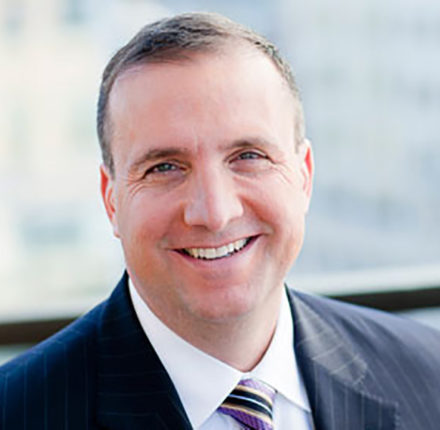 Howard Schweitzer
Chief Executive Officer
About Cozen O’Connor Public Strategies
Cozen O’Connor Public Strategies, an affiliate of the international law firm Cozen O’Connor, is a bipartisan government relations practice representing clients before the federal government and in cities and states throughout the country. With offices in Washington D.C., Richmond, Albany, New York City, Philadelphia, Harrisburg, Chicago, and Santa Monica, the firm’s public strategies professionals offer a full complement of government affairs services, including legislative and executive branch advocacy, policy analysis, assistance with government procurement and funding programs, and crisis management. Its client base spans multiple industries, including healthcare, transportation, hospitality, education, construction, energy, real estate, entertainment, financial services, and insurance.
About Cozen O’Connor
Established in 1970, Cozen O’Connor has over 775 attorneys who help clients manage risk and make better business decisions. The firm counsels clients on their most sophisticated legal matters in all areas of the law, including litigation, corporate, and regulatory law. Representing a broad array of leading global corporations and middle-market companies, Cozen O’Connor serves its clients’ needs through 31 offices across two continents.
Explore Articles and News
See All News-
Pennsylvania Perspective for Thursday, October 15, 2026
October 15, 2026
Pennsylvania State Police Grant Temporary Reprieve as Skill Games Become Illegal Following the expiration of a 120-day state Supreme Court stay and the General...Read More -
Broad Street Brief: October 15, 2026
October 15, 2026
City Hall Council President Johnson Introduces “Philly Food Affordability Act” Council President Kenyatta Johnson introduced the “Philly Food Affordability Act,” a legislative package aimed...Read More -
Illinois Insights: An Update from Cozen O’Connor (10/14)
October 14, 2026
ILLINOIS AROUND THE STATE In lone debate for Illinois governor, Darren Bailey gets testy as JB Pritzker links challenger to Trump “The lone scheduled...Read More